How School Students Create Social Enterprises: Five Key Stages of the Program
Young people are capable of changing their communities. But desire or a good idea alone is not enough. They need knowledge, practical tools and support to help turn an idea into a real project or social enterprise. This is why the Program on Social Innovation and Social Entrepreneurship was developed within the ESIC project.
The program has a practice-oriented format and is aimed at developing participants’ entrepreneurial, leadership, communication and presentation skills. The learning process combines an introduction to modern approaches to social innovation with hands-on work on participants’ own projects, allowing them to go through the full journey from identifying a problem to creating a viable business model.
The first step: understanding the problem
The learning process begins with an introduction to social innovation, the social economy and social entrepreneurship. Participants explore Ukrainian and international examples of social enterprises, study the challenges facing their communities and learn to identify opportunities for positive change.
Special attention is paid to working with community problems. Teams create problem trees, analyze the causes and consequences of social challenges, conduct interviews and use Customer Discovery to better understand people’s needs. This is the stage where the first ideas for future social projects are born.
Participants also learn design thinking tools that help them look for non-standard solutions and develop innovative approaches to addressing social problems.
From idea to business model
After identifying the problem and exploring possible solutions, participants move on to developing the concept of their own social enterprise.
During the second module, teams work on defining the mission, vision and values of their project. They study the Business Model Canvas, analyze the competitive environment, and identify potential partners and customers.
A separate section is dedicated to the Social Impact Canvas, a tool that helps plan and assess the social impact of future activities. As a result, participants develop their first complete business model, describe their product or service, and begin to see their project as a real mechanism for creating change.
Finance and legal foundations
Even the best idea needs financial sustainability. That is why the third module is dedicated to financial management and the legal aspects of activity.
Participants learn the basics of budgeting, financial planning, income and expense structures, cost price and profit. They learn how to assess the financial viability of their solutions and calculate the resources needed to launch a project.
In addition, teams analyze different legal forms of activity in Ukraine and determine which model best fits their goals and needs.
Testing the idea and working with the market
The fourth module helps participants test the viability of their project in practice.
Participants study the basics of marketing, branding and digital communications. They become familiar with the 4P marketing mix, learn how to define target audiences and develop their own communication strategy.
An important part of this stage is creating a minimum viable product (MVP), testing it with potential users and collecting feedback. This allows teams to test their assumptions, identify the strengths and weaknesses of their project, and improve their solution before launch.
How to present an idea convincingly
The final module is dedicated to project presentation.
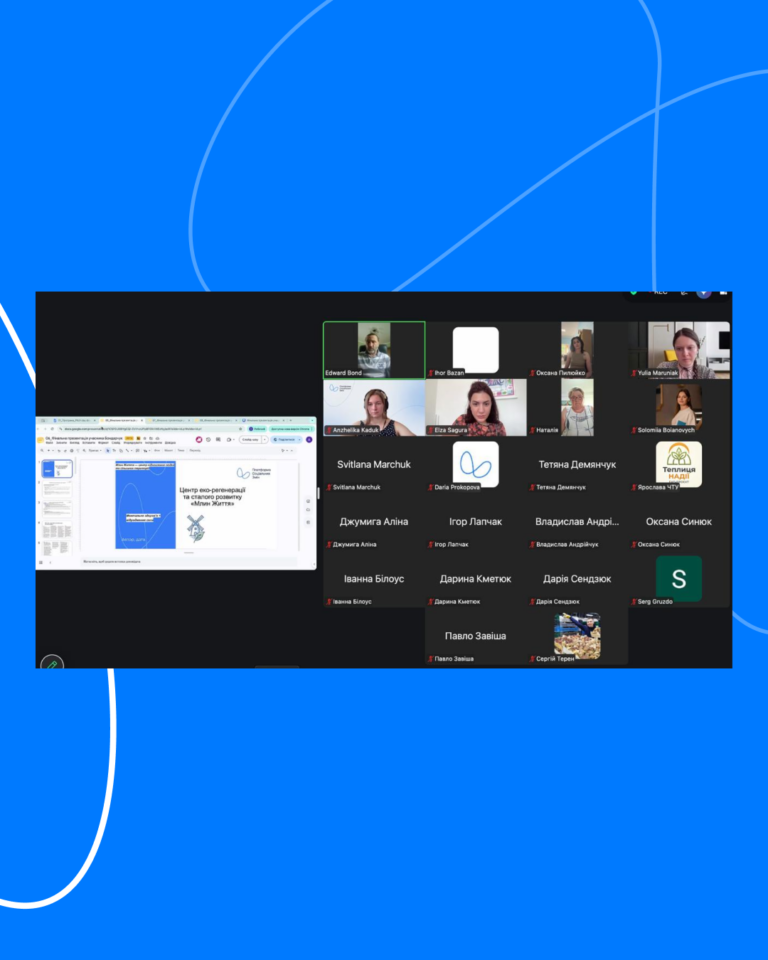
Participants work on the structure of their pitch, learn how to present their ideas effectively, engage with the audience and use visual materials. Before the final presentation, each team goes through a series of rehearsals and receives recommendations from trainers and mentors.
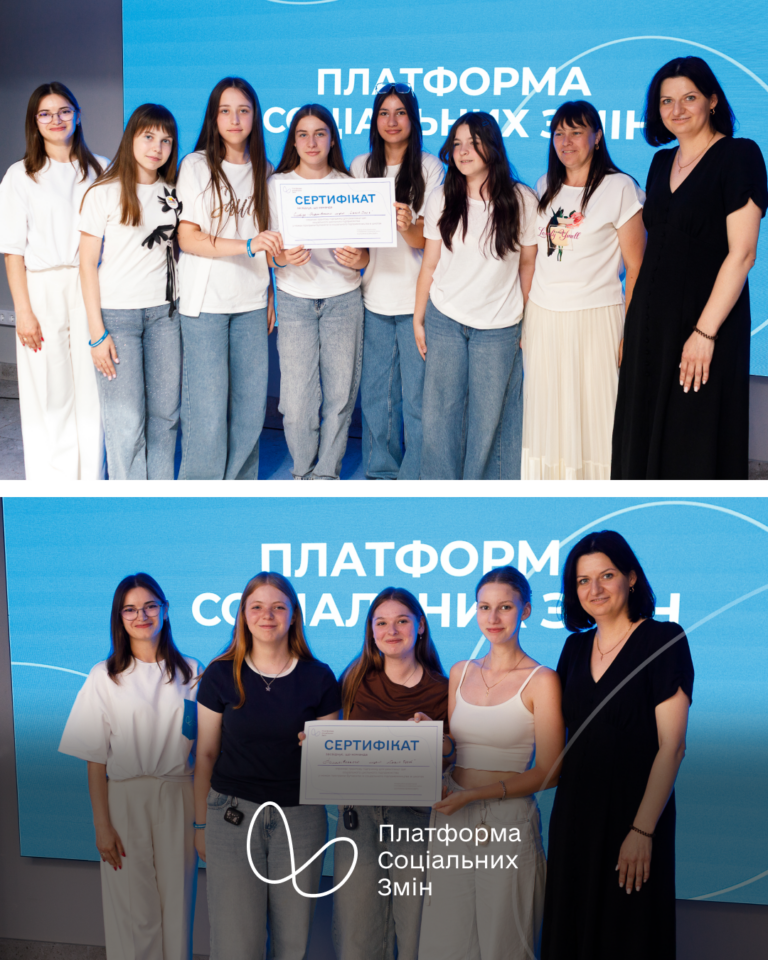
The program concludes with a project presentation, where participants demonstrate the results of their work and their readiness to implement their own social initiatives.
Learning by doing
The key feature of the program is its practical focus.
Each module ends with concrete outputs: problem analysis, a business model, a financial plan, a marketing strategy or a project presentation. Step by step, these elements come together into a complete model of a future social enterprise.
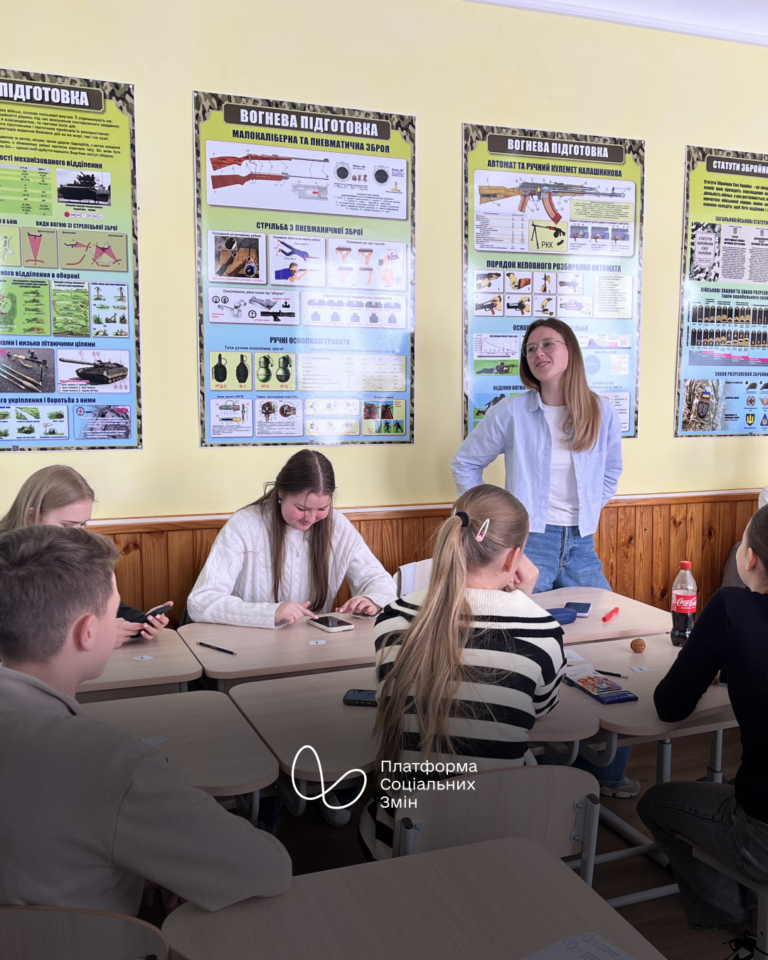
Participants regularly complete practical tasks, work in teams, analyze case studies, test their own solutions and receive feedback from experts.
This approach allows them not only to gain new knowledge, but also to immediately apply it while working on real projects.
Mentor support and learning resources
Throughout the program, teams are supported by practicing mentors with experience in business, entrepreneurship and project management.
Mentor support helps participants adapt the knowledge they gain to their own ideas, improve their business models, refine financial calculations and strengthen their marketing solutions.
All program materials are available on the Howspace platform. There, participants can watch webinar recordings, use presentations, templates, guides and additional materials for independent work. This allows them to learn at their own pace and return to the resources they need at any time.
More than a training program
The Program on Social Innovation and Social Entrepreneurship is not just a series of trainings or webinars. It is a space where young people learn to see problems as opportunities for change, work in teams, create viable solutions and take responsibility for the development of their communities.
This is how social enterprises are born — enterprises that create not only economic value, but also help address important social challenges.
The program is co-funded by the European Union. The views and opinions expressed are those of the author(s) only and do not necessarily reflect the position of the European Union or the European Education and Culture Executive Agency (EACEA). Neither the European Union nor EACEA can be held responsible for them.