How the Platform for Social Change Improved the Approach to Social Care through the CAPABLE Project: 2025 Results
The CAPABLE project, implemented by the Platform for Social Change with the support of Interreg Europe, became one of the key drivers in updating the social care system for people aged 60 and above in the Khmelnytskyi Region in 2025. For the Platform, whose mission is to strengthen resilient communities through education, partnerships, and support for local change, this project has become a clear example of how systematic work can shape new approaches within the social care sector.
Through regional dialogues, cooperation among communities, engagement of educational institutions, and international expertise, CAPABLE established a foundation for long-term solutions that can significantly improve the quality of life for older adults.
The project brought together partners from Ukraine and across Europe while equipping communities with practical tools to develop their own services. This approach fully aligns with the mission of the Platform — helping communities become stronger, more professional, and capable of implementing change independently.
The goal of CAPABLE is to enhance the quality, accessibility, and sustainability of social care services for individuals aged 60 and above. This approach is grounded in the principles that the Platform for Social Change consistently applies in its work: creating opportunities for practitioners, strengthening local expertise, and fostering partnerships that enable communities to confidently develop and enhance their services.
Through interregional exchange, the use of leading European practices, and the strengthening of competencies among social care professionals, the project laid the groundwork for introducing new care models in the Khmelnytskyi Region.
In 2025, the project’s geographical coverage encompassed ten communities across the Khmelnytskyi Region — including urban, rural, and settlement communities — as well as four additional communities from eastern and western Ukraine. More than 374 participants took part in project activities, including representatives of local authorities, social services, territorial centers, civil society organizations, universities, and businesses. Such broad participation illustrates how the Platform works to strengthen systemic collaboration and create an environment where joint solutions become possible.
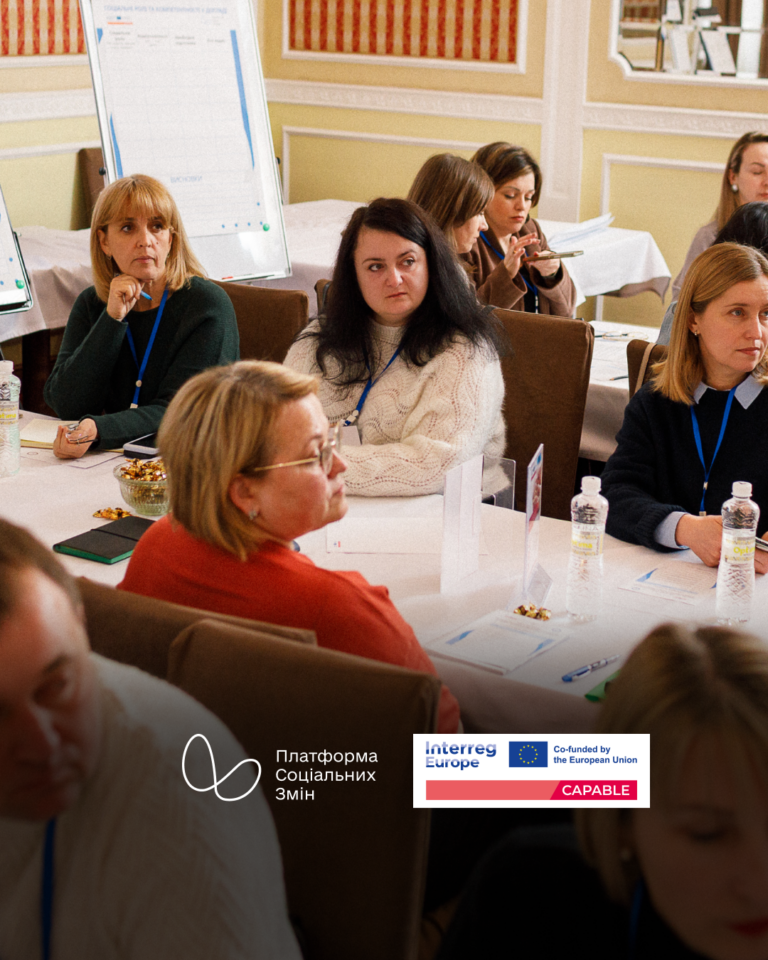
Throughout the year, the Platform for Social Change organized seven public events as part of the project. Three roundtables provided communities with a space to discuss challenges in the care system and to identify joint solutions — a format through which the Platform traditionally facilitates effective, collaborative processes. Four training webinars ensured broad access to knowledge, with an average of 54 participants joining each session, totaling 260 attendees. Additionally, an interregional meeting with European partners allowed communities to identify how their challenges align with broader European trends.
The year 2025 also marked significant progress in strengthening institutional cooperation. Two signed memorandums between higher education institutions and the Platform for Social Change confirmed a shared commitment to further developing professional education in the field of social care. Additionally, the tripartite collaboration between the Platform, the Dunaivtsi community, and the “Starenki” Charitable Foundation became an example of how dialogue can evolve into practical, joint action.
The international dimension became another critical focus of the year. Participation of the Platform’s team in the kick-off meeting in Trieste (Italy) made it possible to explore care approaches used across European countries and to adapt these insights to the Ukrainian context. Particularly significant was the inclusion of the Khmelnytskyi Municipal Territorial Center for Social Services, which was presented among partners from five countries as an example of high-quality practice in supporting older adults.
This strengthened Ukraine’s presence in the broader European discussion on ageing and innovation. Such international engagement aligns with the Platform’s strategy to integrate Ukrainian communities into wider professional networks and open new opportunities for their development.
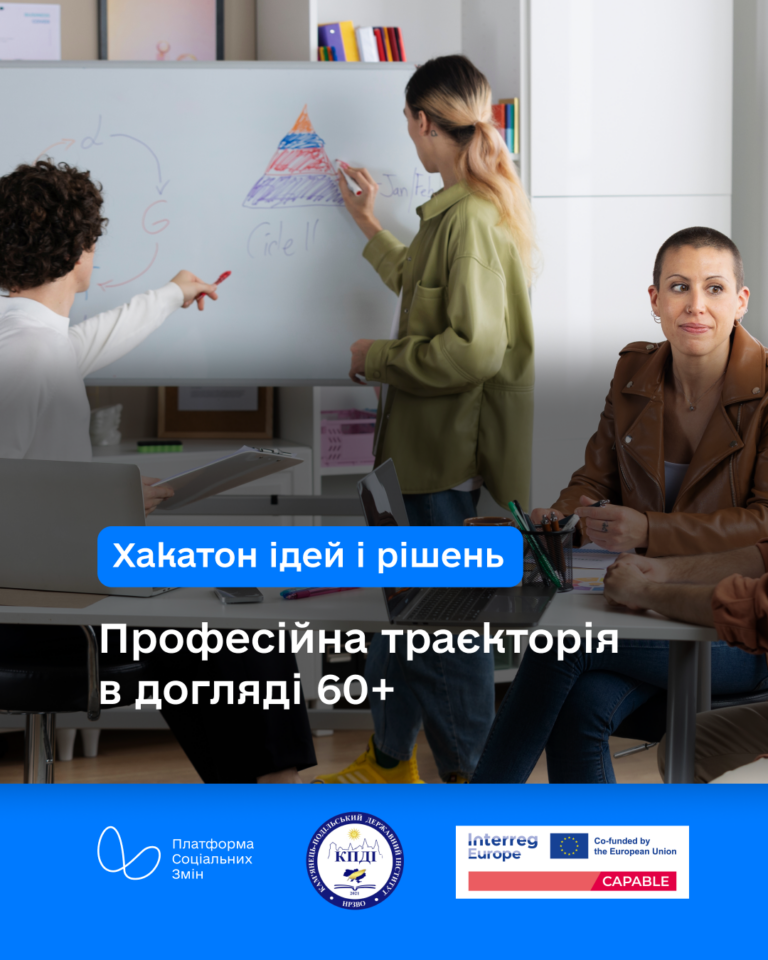
The work carried out through the roundtables resulted in concrete outcomes and helped outline the next steps. The first roundtable facilitated a comprehensive assessment of the care system, identifying 16 needs, defining six priority areas, and revealing seven key competency gaps. The second roundtable focused on workforce development, during which participants agreed on seven areas of change related to working conditions, supervision, talent pipelines, and data practices. The third roundtable produced three potential models that can serve as the basis for future pilot initiatives. Collectively, these processes reflect the Platform’s approach — working with data, engaging experts, and creating solutions that can be scaled across communities.
Participants also identified seven key competency gaps and developed a stakeholder map for the region. The second roundtable focused on workforce-related issues, where participants agreed on seven areas of change concerning working conditions, supervision, talent pipelines, and data management. During the third roundtable, three potential pilot models were selected, which communities can adapt to their local contexts. In total, the three roundtables brought together more than 114 participants.
The “Social Services 60+” educational programme became an essential component of the year. The four webinars brought together 374 participants, with speakers representing the Ministry of Social Policy, universities, and project offices. Each session concluded with analytical materials and recommendations for communities — a format that ensures high-quality learning and the practical application of acquired knowledge.
The year concluded with the establishment of a solid foundation for further progress. Communities gained practical tools, experts received a space for dialogue, and Ukraine strengthened its presence within the broader European context. CAPABLE has reinforced its reputation as a project that delivers not only tangible results but also long-term systemic development.
In 2026, the project will enter a new phase — the implementation of the solutions developed thus far. This will bring the Platform closer to fulfilling its mission: helping communities create an environment where social services are high-quality, accessible, and responsive to the real needs of people.
This project is supported by the Interreg Europe programme, co-funded by the European Union.