The Role of Social Entrepreneurship in Ukraine’s Recovery: How Communities Are Transforming the Country Through Social Business
Ukraine’s recovery is often associated with rebuilding infrastructure—bridges, roads, housing, and energy networks. This is an important part of the process. But it is not the only one, nor the most important.
The true foundation of recovery is people. Those who remain in their communities, work, create jobs, take responsibility, and shape new meanings of life after crisis. Without this human foundation, even the most modern buildings and roads cannot ensure the country’s long-term, sustainable development.
Ukraine’s recovery is a long-term process that does not begin “after the war,” but is already underway. It requires new economic models capable of operating in conditions of uncertainty, demographic change, and local challenges. One such model is social entrepreneurship.
Social enterprises combine economic activity with the solution of social problems. They create jobs, engage vulnerable groups, and keep resources within communities. As a result, social entrepreneurship becomes not a temporary response to a crisis, but a mechanism for long-term resilience and community self-recovery.
Why the old recovery model no longer works
The idea of recovery as a return to “the way things used to be” no longer reflects reality. Ukrainian communities are entering the post-war period with different needs and different resources.
Millions of internally displaced people, a growing number of people with disabilities, the return of veterans to civilian life, and the contraction of the industrial sector are reshaping the economic logic of territorial development. In these conditions, reproducing pre-war economic models is ineffective.
Large-scale infrastructure projects remain important, but they do not address the key question: how communities are meant to live and develop on a daily basis.
As a result, the focus is shifting from centralized solutions to local economic models that can adapt quickly to change. In this new reality, small and medium-sized businesses—and social entrepreneurship in particular—are becoming the backbone of community resilience.
How social entrepreneurship works at the community level
In communities, social entrepreneurship takes shape through simple yet effective solutions. The Inshi restaurant in Lviv combines employment for internally displaced people with a “suspended meal” model. The Mama Peche project in Teofipol provides women in difficult life circumstances with professional skills while supplying the community with affordable bread.
Another important and rapidly growing area is veteran-led businesses. For service members returning from the front, work becomes a key element of reintegration into civilian life—it restores a sense of stability, belonging, and a clear role in society.
An example of combining volunteer initiative with a sustainable model is the Tasty with Hope! initiative, which has established the systematic production of dried borscht for the Armed Forces of Ukraine, bringing communities together around a shared purpose.
These examples demonstrate that social entrepreneurship is not a temporary response to crisis. It is a mechanism for long-term community resilience—creating jobs, strengthening social ties, and laying the foundation for development after the war.
Why communities are becoming the center of Ukraine’s recovery
In the coming years, international donors—including USAID, the EBRD, and the World Bank—are increasingly focusing on supporting local actors within communities. Transparency, effectiveness, and the ability to operate through clear and viable economic models have become key criteria.
Today, community recovery depends not on the volume of aid received, but on the capacity of local teams to think like entrepreneurs: to formulate projects, measure impact, and build sustainable solutions. This is why social entrepreneurship is emerging as a central tool for development.
Unlike humanitarian assistance, which ends when funding runs out, social enterprises continue to operate, create jobs, and generate lasting value for communities. By combining economic viability with social impact, this model enables communities not only to recover but to grow and thrive in the long term.
The Role of the Platform for Social Change
The Platform for Social Change does not merely observe the transformations taking place in communities. We act as a catalyst—helping turn ideas into viable social entrepreneurship models.
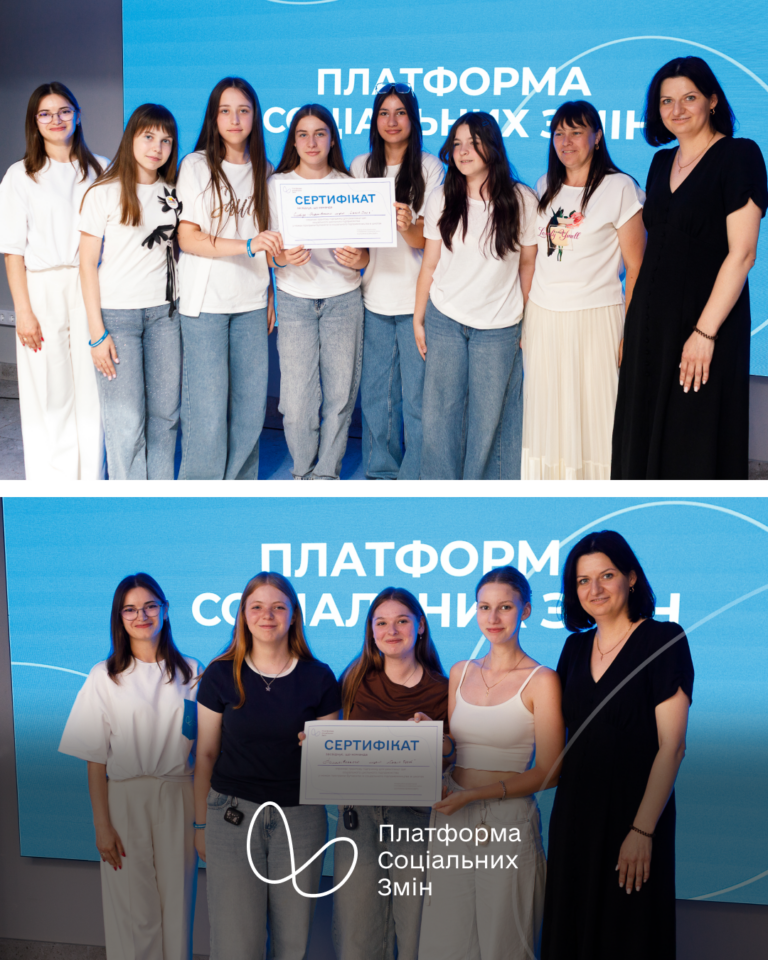
Civil society organizations learn how to work with entrepreneurial models, religious communities become hubs of social change, and through bootcamps, a new generation of entrepreneurs is formed—those for whom profit is inseparable from values and responsibility.
This work is especially important today, as legislative changes, including Draft Law No. 14156, are gradually shaping a legal framework for social entrepreneurship in Ukraine. In this context, the Platform’s role is to bring together individual local cases into a cohesive ecosystem that can serve as the foundation for the country’s long-term economic and social development.
Social Entrepreneurship as a Long-Term Strategy
Social entrepreneurship is gradually becoming the foundation of Ukraine’s new economy—one in which efficiency goes hand in hand with humanity, and community development does not contradict profitability. It proves that business can be resilient, responsible, and socially impactful at the same time.
Ukraine’s recovery does not begin with top-down decisions. It is born in specific communities—from a veteran-owned café that provides both jobs and a sense of returning to life, from an educational hub for children, from a small workshop or a social service that responds to real human needs. These local actions form the basis for long-term change.
Social entrepreneurship creates a win-win model: communities gain jobs and services, donors see sustainable results, and the state builds an economy capable of developing without constant external support.
The Platform for Social Change continues to build a bridge between ideas and reality—helping communities, entrepreneurs, and organizations turn social motivation into sustainable development models.
Ukraine’s recovery begins with each of us.